What a lineup of books, such a high standard and variety of subjects! Congratulations to the winners and shortlisted authors, as well as any other of our members who created a book in the last two years and entered it for consideration. You are all winners!
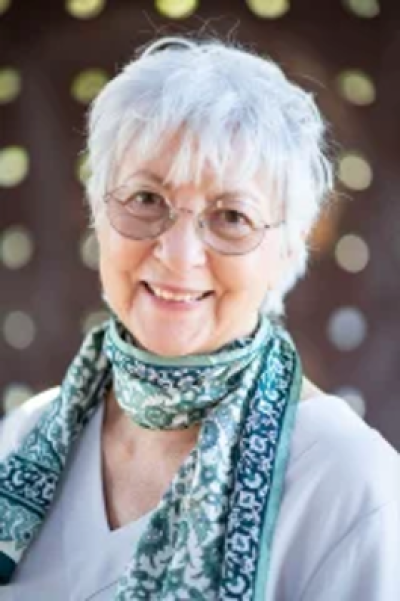 Poetry – Judge: Marcelle Freiman
Winner: Through a Glass Darkly ♦ Libby Hathorn
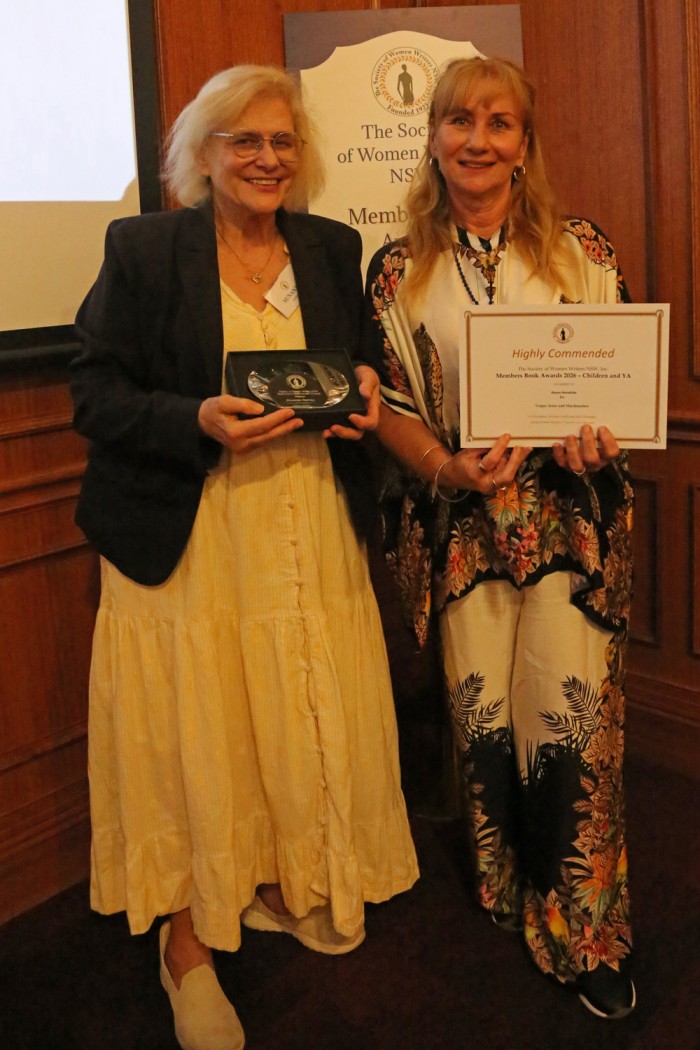
Highly Commended: Seang (Hungering) ♦ Anne Casey
Highly Commended: Landfall in New Zealand ♦ Pip Griffin
Commended: Barefoot Poetess ♦ Paris Rosemont
Judge’s report
The ten submissions for the poetry category included works in a range of poetic genres and lengths: a verse novel, books of poetry based on historical research, collections and small chapbooks. I have considered carefully the scope of each entry and the quality of the poetry’s formal craft and technique, depth of thought, and experimentation. In any accomplished poetry, language choices, sonic effects, the potential of the poetic line for pace, meaning and structure, and the poetry’s formal properties (including free verse) all function to create emotional intensity and impact within the writing’s real and imaginative worlds. Each of the shortlisted books have achieved this in different ways. I have very much enjoyed reading these poetic ventures and appreciate the sustained work and creativity that have gone into them.
It was a very close selection between the Winner and the Highly Commended and Commended books. The Winning book is Libby Hathorn’s verse novel Through a Glass Darkly, a compelling, insightful exploration of the search for meaning and light through the main character’s resurrected and difficult memories. Its blend of poetry and narrative technique is fully integrated and rich. Pip Griffin’s Highly Commended Landfall in New Zealand – Two narratives – a history based on archival family research – is rendered in poetic couplets throughout, bringing voices and individual histories imaginatively into the present. I especially commend the work’s integration of Gaelic idiom and Maori language with the period’s idiomatic English. Also Highly Commended, Anne Casey’s collection Seang (Hungering) emerges from an ambitious project of doctoral research. It transforms aspects of archival source materials into a collection of poetry that highlights the cruel colonial injustices experienced by women (and their children) sent from Ireland to Australia during and after the Great Famine. Finally, the Commended title, The Barefoot Poetess, by Paris Rosemont, is an energetic and daring creative accomplishment. I congratulate all the shortlisted poets, the finalists and the Award winner on their achievements.
Honorary Associate Professor Marcelle Freiman
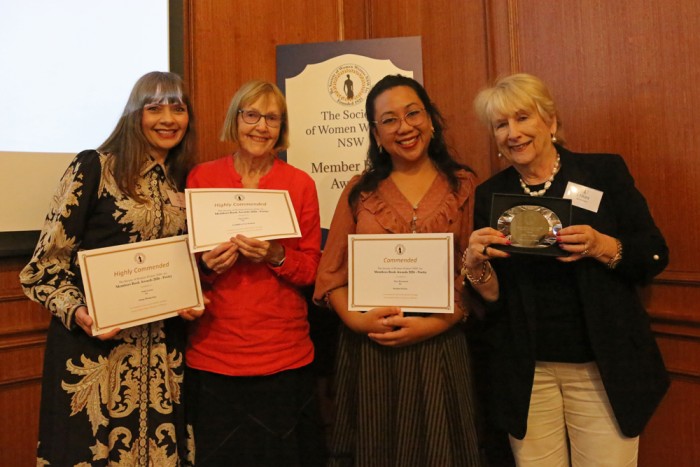
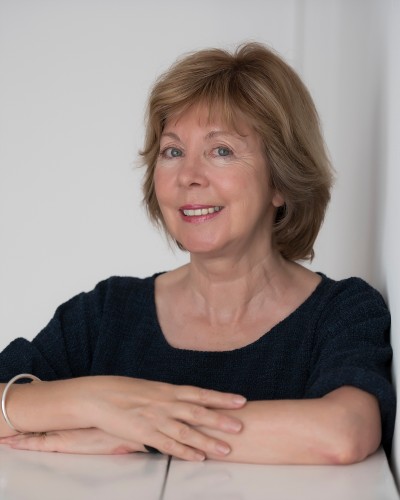 Non-Fiction – Judge: Carmel Bendon
Winner: Raven Mother ♦ Jane Messer
Highly Commended: Bounty ♦ Elizabeth Lancaster
Commended: The Steering Wheel ♦ Caroline Anne Butt
Judge’s report
This year’s non-fiction award attracted only five entries but all used memoir as a portal to more wide-ranging considerations such as family history, illness, abuse, biography, travel, and social or psychological considerations. Overall, the entries were excellent – well-written and engaging – and I truly congratulate every entrant. There is always an emotional cost to the authors of memoir and I was particularly moved by the raw honesty of the submissions with, for example, Wen Gibson’s Stammering Against the Truth revealing the shocking experience of sexual abuse in early childhood and the devastating life-long consequences that followed, and Robyn McWilliam’s Against the Breeze dealing with the breakdown and rebuilding of a marriage, cancer, and the restorative role of sailing.
Ultimately, however, due to the smaller number of entries, I made the difficult decision to shortlist and award only three of the books. In making that decision, I looked for absorbing subject matter, convincing portrayal of the time and place in which the non-fiction is set, seamless writing quality, clarity, cohesion of ideas, thematic integrity, and honesty and skill in melding the factual with the appropriate degree of emotional depth when necessary. Important, too, was the book’s structure – well-paced revelations of facts and details, establishment of recognisable and relatable links between the author’s personal experience and perspective and that of their readers, and a measured denouement that brought together all strands of the work. Three books best achieved these criteria for me:
Caroline Anne Butt’s The Steering Wheel is, at its centre, the story of a marriage in which the woman struggles to maintain family life under the brutal cloud of a husband’s coercive control. Butt’s accomplished balancing of commitment, fear and love, is set within the mores and expectations of suburban Australian life in the 1970s but, as we all know, while societal awareness of this dreadful situation might be more prominent now, so is its incidence and thus Butt’s book will resonate with many women today.
Elizabeth Lancaster’s memoir Bounty is heartwarming without being sentimental. In exploring the progressive devastation of living with multiple sclerosis, the author finds joy and strength in the support of a life-long friend (with her own debilitating challenges), the distraction and loyalty of her high-spirited dog, Bounty, and the other friends that Bounty draws to his owner in his daily jaunts in the local dog park. It is a beautifully observed story of the ordinariness and extraordinariness of daily life.
Jane Messer’s Raven Mother is a meticulously researched and perfectly braided story of memoir, social history and biography. Messer glides back and forth between her own time and experience into a search for the truth about her paternal grandmother, the ‘Raven Mother’ of the title. A ‘raven mother’ is one who abandons her child and Messer’s search to understand the motives behind this grandmother’s apparent abandonment of her son (Messer’s beloved father) takes readers back through the rise of Nazism and Jewish persecution, particularly in pre-war Berlin, the establishment of the State of Israel and the personal struggles of all family involved in, and touched by, the associated traumas.
Dr Carmel Bendon
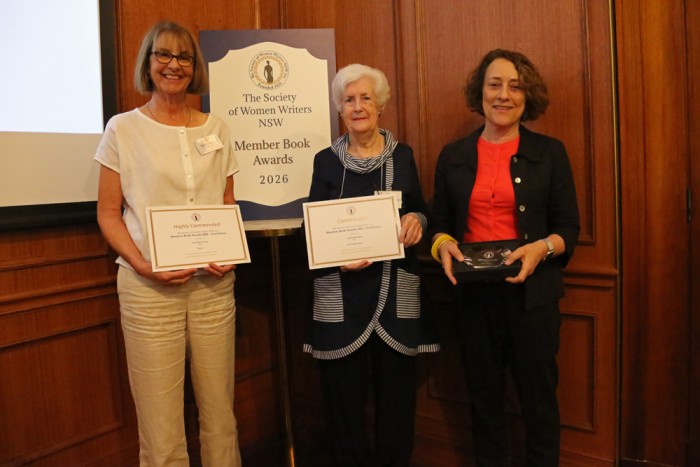
 Children and Young Adult – Judge: Gail Erskine
Winner: Parrot Palace ♦ Susanne Gervay
Highly Commended: Vesper Jones and Marshmallow ♦ Karen Hendriks
Judge’s report
Parrot Palace is an engaging young chapter book that brings to life the joys, challenges, and discoveries of childhood friendships. Hari with his Indian sole parent family and Nani; Lily-Rosa with her Hungarian dad and Chinese mother and our Dinky-di Australian Mikey. While Parrot Palace is fun to read and engages the reader with its series of adventures, there are deeper stories within the narrative including diverse families, resolution of bullying, mateship and friendship. The kids from different cultures in this apartment block, become best friends and the story invites the children, their families and community to get along together.
Food plays an important part of the story. The characters love being introduced to the various foods and traditions of each culture: Hari’s grandmother makes Jalebi (Indian crunchy swirling sweets,) and Lily-Rosa’s Opa (father) cooks the best Hungarian and second-best Chinese food.
Susanne Gervay’s style is deceptively simple. Easy to engage with, the narrative is fast-paced with lively dialogue, humour and incidents that create a page-turning reading experience for the young reader. Short chapters maintain the pace of the story and are perfect for the intended audience. The use of first person, present tense, told from Hari’s point of view immediately engages readers in Hari, Lily-Risa and Mikey’s life. These are great kids with great families which you will love.
Glossaries of Hindi, Chinese and Hungarian terms used in the text help explain cultural differences and Sarah Tabassum’s drawings help illustrate unusual aspects of the story. Parrot Palace celebrates inclusivity and the multicultural spirit of Australia. The story is charming and will delight young readers. It is a great example of filling the need for emerging young readers.
Vesper Jones and Marshmallow is a picture book story about tackling the common problem of frightening dreams that young children often experience. From the very beginning, Vesper decides the time has come to take control and, using a handheld imaginative device, called a Dream Changer, and by drawing on her creativity and bravery, Vesper Jones experiments with replacing ‘Scary Things’ in her dreams with ‘Friendly Things’ instead. Ably assisted by Marshmallow the cat, Vesper is encouraged to face her fears and these scary things.
With vivid descriptors and emotive, active verbs, Hendriks crafts a captivating story that captures the menacing nature of the ‘Scary Things’ and authentically conveys Vesper’s emotional experiences from fear and despair to courage and eventual sense of triumph. The storytelling feels relatable and sincere, especially with the positive statements that she makes, e.g. ‘I am a dream controller!’
Corso’s evocative illustrations, which span the pages, are integral to the storytelling. Black silhouettes of the ‘Scary Things’ with sharp teeth and pointed beaks, contrasted against a blank white background, intensify their menacing nature. In contrast, the gentle-looking imaginary ‘Friendly Things’ and Vesper’s make-believe supportive companion, Marshmallow the cat, appear in brightly coloured hues, surrounded by whimsical backdrops of flowers and stars that conjure a sense of magic and delight. Close-ups of Vesper’s varying facial expressions further enrich the narrative by capturing her emotional experiences. The endpapers are brilliant explosions of colour.
Vesper Jones and Marshmallow presents a compassionate approach to the troubling experience of recurring frightening dreams, whilst also being an imaginative and engaging story. For children aged 4-7, it may be a reassuring narrative to help them feel understood and less alone in their nighttime fears. While the imaginative Dream Changer device provides a creative and empowering metaphor, it’s likely that adult talk and support would be needed to help children navigate these experiences more fully.
Guess How I Was Born is a fun, heartwarming picture book that embraces the many ways children come into the world. Told through the eyes of Violet, who is having the best day ever at a dress-up party with her friends, the story highlights different family structures and the wonderful ways we all belong. The story romps along in a riot of colour and activity. However, the ongoing question, Guess how I was born? which has been built up throughout the story, is simply stated without any kind of explanation. The accompanying illustration features test tubes, atoms, light bulbs, lightning and even a question mark but nothing about what IVF means. A young reader will probably accept this and turn over to focus on love being the main focus. From IVF and adoption to step-families, same-sex parents, and multi-generational homes, this book fosters inclusion, acceptance, and a celebration of diversity. This joyful and humorous story will assist families, schools, and libraries to explore the uniqueness of every child and family.
Seeking Treasure with Bodhi is a brightly coloured illustrated children’s picture book that gently introduces young readers to the practice of mindfulness through a series of new experiences while out walking through nature. The endpapers are delightful and the illustrations are a strength of the book.
The story shows simple ways for the reader to calm their mind, recognise their feelings, and connect with the present moment when big feelings or difficulties arise. However since it does not follow a narrative structure, adult support may be needed when reading and drawing the young reader to talk about their big feelings. It introduces the practice of mindfulness by encouraging children to pause, breathe, and discover their own inner resilience. Rooted in the spirit of Humanistic Buddhism, Seeking Treasure with Bodhi invites children to discover that the greatest treasure is not something we find outside, but something we cultivate within. Information on meditative practices is provided.
 Fiction – Judge: Margaret Wick
Winner: The Body at Bones ♦ Jude Chapman
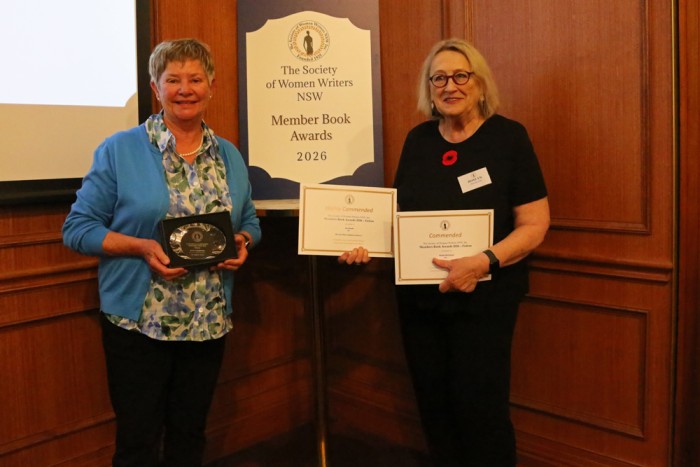
Highly Commended: Murder and Masquerade ♦ Catherine McCullagh
Highly Commended: The Girl who Climbed on Rooves ♦ Sue Woolfe
Commended: Foreign Attachments ♦ Roslyn McFarland
Judge’s report
I would like to start by thanking the Society for giving me the opportunity to indulge in some very enjoyable reading which covered a diversity of topics – some examples being war, violence, brutality, inequality and the gamut of emotional responses, accompanying them – loneliness, self-doubt, anger, rejection, to name some.
Less enjoyable was the task of shortlisting and choosing a winning entry.
The high standard of selected writing of these entrants displayed sustained reader engagement, well-developed structure and balanced emotional tension. As one of the writers in this Fiction category noted in her novel ‘we never know what combinations of words and sounds speak to others’. It was a difficult task.
CS Lewis wrote: I can’t imagine anyone enjoying a good book, and reading it only once. So it is with this in mind, these are the entries I would choose to read again:
Foreign Attachments - clever and and well integrated, this novel is a work of fact and fiction, narrated by two females and set in two time frames spanning almost a hundred years. Fact and fiction are anchored by the partial and never dull life stories of Australian artist Stella Bowen and author Ford Maddox Ford. It is informative and ‘a good read’.
Murder and Masquerade - This is a door-stopper of a novel, literally. Set in post-war Europe, particularly London, it has more twists and turns than the maze at Hampton Court. Rich in detail and historically accurate, depictions of life at this time are engrossing. Social history and a criminal undercurrent fuse to provide very absorbing reading.
The Girl who Climbed on Rooves - The author presents a story of social displacement and emotional trauma, written in the metaphorical format of a musical quartet. The narrator is the performer and the reader the audience. The subject matter is in turns, raw, heartbreaking and tender. This makes for compelling and at times disturbing reading.
The Body at Bones - A well-used and loved local park is thrown into chaos when a body is found. This is a multi-layered story which proceeds at a measured pace, with careful character and plot development providing a firm basis to ensure reader involvement. At times funny, often serious and disturbing, the many facets of the characters portray the good, bad and ugly forces that constitute a community. It is a satisfying read in every way.
Again , all writers who submitted entries are winners. Their skill in crafting a work of fiction and then letting it loose into the wider, unknown world of critical readership is to be applauded.
Thank you for sharing these lovely stories and all they represent with me.
Margaret Wick
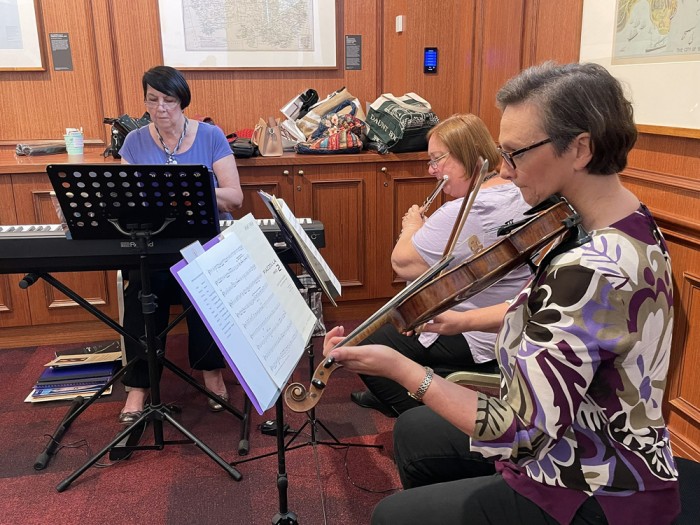
Lavanda Players
The Lavanda Players, led by our very own Vanessa Proctor, created a wonderful, celebratory atmosphere.
Photos by Rita Shaw.
Zoom recording by Amanda Mark.